
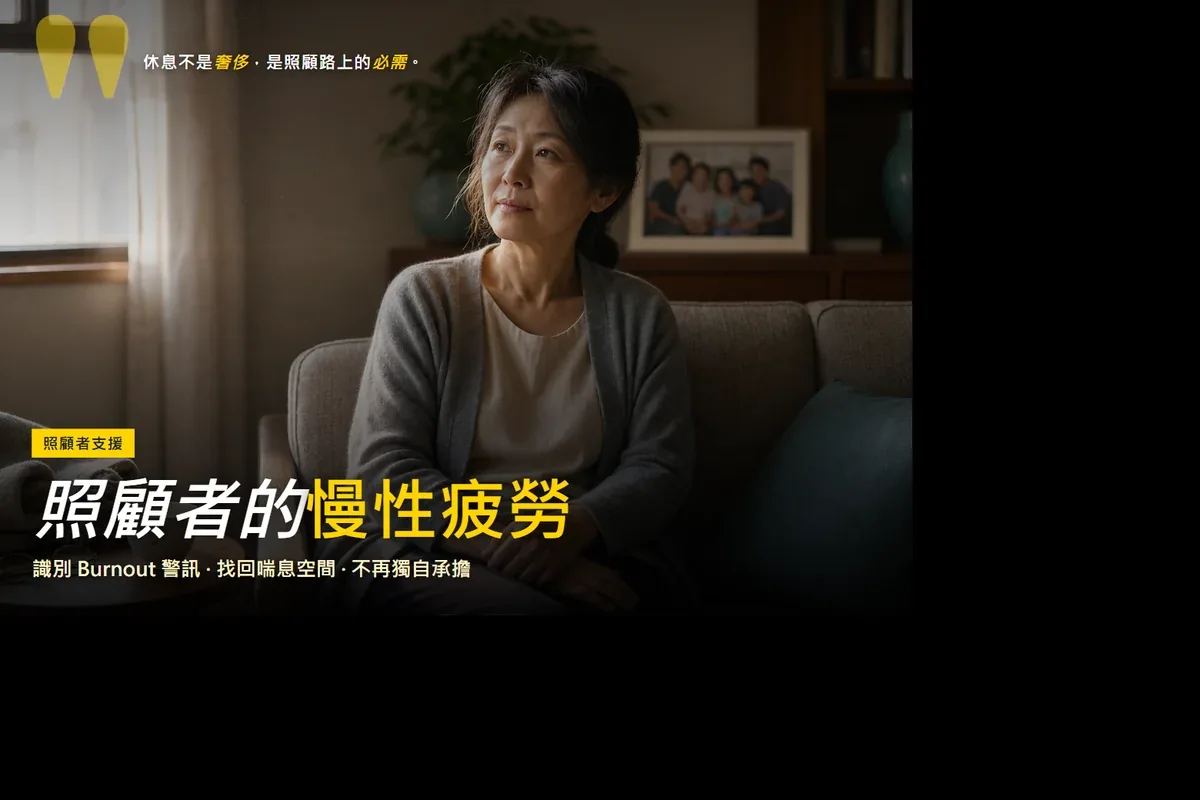
What is carer burnout?
Caring for a sick family member or an older adult over the long term comes from love, but it also drains energy to an extreme. Many carers carry a heavy physical and emotional burden without noticing, and often realise how serious the problem is only when "burnout" appears.
Carer burnout is a state of physical, emotional and mental exhaustion caused by long-term care stress. It is not ordinary tiredness. Not recovering energy even after rest, feeling numb or fed up with the work of caring, and always feeling that "nothing is done well" are all typical features of burnout. The state deepens step by step, from occasional tiredness at first to complete exhaustion.
Research shows that 40–70% of family carers have clear depressive symptoms, and that carers have a 63% higher risk of death than non-carers of the same age. Many carers are used to putting the patient first, and as a result often neglect their own health.
Warning signs of burnout
Noticing the following signs early helps to take action before the problem gets worse:
Physical signs
- Often feeling very tired, and unable to get going even after enough sleep
- Lower resistance, and falling ill often
- Clear weight gain or a big weight loss
- Frequent headaches or stomach aches, or tense, uncomfortable muscles
Emotional signs
- Feeling helpless or hopeless, as if trapped
- Losing patience very easily with the patient or family members
- Feeling depressed or anxious, or having big mood swings
- Losing interest in things once enjoyed
Social signs
- Less contact with relatives and friends
- Giving up personal interests and social activities
- Feeling that the people around do not understand
- Isolating oneself more and more and not wanting to be with people
Behavioural signs
- Neglecting one's own health needs
- Relying on alcohol, medicine or constant snacking to relieve stress
- Changes in sleep habits, such as frequent insomnia or sleeping too much
- Starting to find caring too much, or making mistakes through neglect
If you notice several of the above in yourself, it does not mean you are not doing well. It only means you need help now. Facing your own needs honestly is a way of looking after yourself, and it is also responsible towards the patient.
Common sources of stress for carers
Only by recognising where the stress comes from can it be dealt with more precisely:
Time pressure
- Feeling on call 24 hours a day
- The patient's care needs are hard to predict
- Hard to arrange any time of one's own
- Sleep interrupted again and again
Financial pressure
- Spending on medical care and nursing keeps rising
- Working hours may need to be cut
- Income falls while spending goes up
- Plans for the future are uncertain and hard to make
Emotional pressure
- Finding it very hard to watch a loved one's condition change
- Finding it hard to adjust at once to the new role of carer
- Feeling grief in advance because of a loved one's long illness
- Often feeling guilty and blaming oneself for not doing enough
Pressure in daily life
- Having to look after other responsibilities at home as well
- Hard to balance work and caring for a loved one
- Friction with other family members over care
- No private space or time of one's own
Self-care strategies
Looking after yourself well is what lets you look after others better:
- Accept imperfection—You do not need to force yourself to be a "perfect carer". Everyone has limits, and it is quite normal to admit there are things you cannot do. Managing to be "good enough" is already a great deal.
- Keep some personal time—Set aside at least 30 minutes a day for yourself, and keep up a small interest or habit. This is not "selfish". It is a basic need.
- Keep up social contact—Chat with relatives and friends regularly, or join a carer mutual-help organisation and share experiences with others in the same situation, so that loneliness is less likely to set in.
- Look after your physical health—Have regular health checks, keep up an exercise habit as far as possible, and also watch your diet and sleep.
Getting support
The burden of care should not be carried alone, and the following resources can all be put to good use:
Home nursing service
- Professional nursing staff visit the home to help
- Share the usual care work
- Let the carer free up time to rest
- Teach the right nursing methods
Respite care
- Short-term day or residential care
- Lets the carer put down the work and rest
- Suits carers who need a longer rest
- Regular use of this kind of service helps to prevent physical and mental exhaustion
Psychological support
- Individual or family counselling
- Carer mutual-help groups
- Stress management courses
- Social worker follow-up
Educational resources
- Care skills training
- Talks on knowledge about illnesses
- Carer workshops
- Online learning resources
Our home nursing service can share the work for carers and free up time to rest. Whether you need regular home nursing, cover at short notice, or want to learn nursing skills, our team can help from the side.
Frequently asked questions
Finding the stress of caring heavy? Let our home care team give professional support so that you have room to breathe.
Learn about home nursing services