Nova Health
NOVA HEALTHHome nursing and physiotherapy

Home physiotherapy across Hong Kong

Home physiotherapy,
led by full-time registered physiotherapists

Registered physiotherapists provide our home physiotherapy for stroke, Parkinson’s disease, recovery after surgery, pain conditions and loss of fitness in older people. The service uses a physiotherapist case manager system. The therapist visits the patient at home, carries out the assessment and training there, helps to remove hazards in the home, and follows progress against clear goals.

  • Hong Kong registered physiotherapists
  • Home visits across Hong Kong
  • 45 minutes $900 · 1 hour $1,000 · 1.5 hours $1,300
  • Not a side business of a care agency

Services overview

Home physiotherapy services in Hong Kong

Home physiotherapy means that a registered physiotherapist visits the patient at home to assess and treat. Older people do not have to travel, and do not have to queue at a clinic. The service suits many different situations, including recovery after stroke, Parkinson’s disease and other neurodegenerative conditions, dementia, recovery after joint replacement or fracture surgery, knee degeneration, sarcopenia and frailty in older people, muscle pain of all kinds, chronic obstructive pulmonary disease and patients who need chest physiotherapy to clear sputum, as well as fall-prevention training and fitness maintenance for older people in general.

The main difference when training at home is that what the patient learns can be applied directly to daily life. The therapist designs exercises around the sofa, dining table and toilet threshold in the patient’s home, which targets the movements that most often lead to falls: standing up, turning and stepping over a threshold. The therapist can also assess the home on the spot and reduce hazards. Research shows that home-based rehabilitation gives comparable results to outpatient rehabilitation in many situations, such as rehabilitation after joint replacement and pulmonary rehabilitation. Older people also tend to be more motivated, and find it easier to keep going, when they practise in a familiar environment. This is the advantage of home physiotherapy over a clinic.

Families usually care most about fees and how to choose. Our home physiotherapy costs HK$900 for 45 minutes, HK$1,000 for 1 hour and HK$1,300 for 1.5 hours, with 2 hours or longer available on enquiry. There is no minimum charge, no package and no prepayment. We visit across Hong Kong (Hong Kong Island, Kowloon and the New Territories), and visits can be arranged at private homes, residential care homes or hospitals. The practical differences between providers include whether the therapist is full-time or part-time, whether the therapist is directly employed or outsourced, whether written treatment records are kept, and whether the registration number is shown. To find out which arrangement suits an older family member best, ask a registered physiotherapist directly on WhatsApp.
Conditions we treat

When home physiotherapy applies

If a family member is facing any of the following conditions, physiotherapy may help. Each group lists the conditions we treat at home.

Training for everyday movements

Four levels of fall-prevention training

Most falls in older people happen when they stand up, turn or step over a threshold. The three exercises often used in traditional rehabilitation (pedalling a bike, pulling a rope and kicking a sandbag) have no link to everyday movements, and however much they are practised they rarely carry over to real life. We start from the most basic sitting down and standing up, and increase the difficulty step by step. The aim is that an older person can stay steady even when walking and doing something else at the same time.

LV.01

Whole-body strength training

Practising sitting down and standing up strengthens the thigh and core muscles and builds the foundation for fall prevention

At home
Sit-to-stand using the dining table or a firm handrail, and wall squats
Carries over to
Getting up from the sofa or toilet without needing a hand
Therapist
Adjusts chair height, counts repetitions and watches that the knees do not collapse inward
LV.02

Dynamic balance

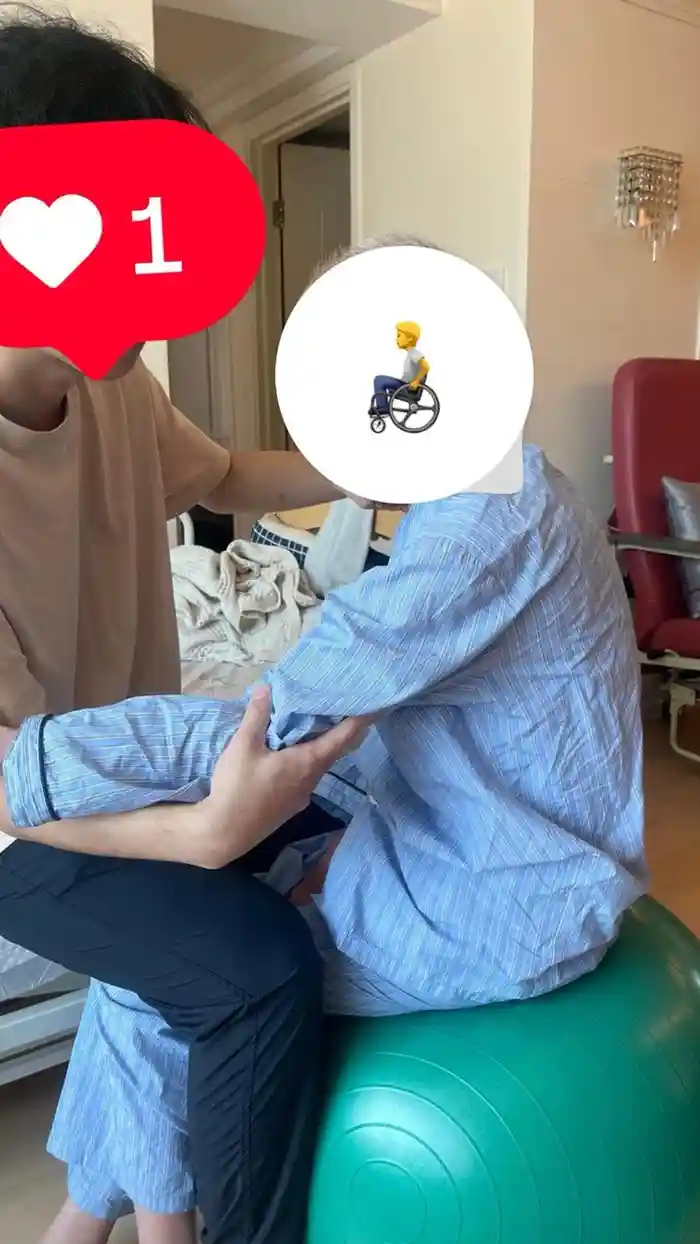
Sitting on a gym ball, throwing and catching a ball while standing, tandem stance (one foot in front of the other)

At home
Standing on one leg holding the edge of a table, and shifting weight from side to side
Carries over to
Standing steadily to put on socks, and turning in the kitchen without losing balance
Therapist
Stays close to spot the patient and gradually reduces the hand support
LV.03

Functional training

Practising turning, stepping over obstacles and tai chi makes movements more continuous and closer to daily activities

At home
Stepping over a threshold, going up and down one step, and walking around furniture
Carries over to
Going in and out of the toilet or a lift, and walking in the wet market
Therapist
Designs the route from the actual paths used at home
★Goal: living independently at home
LV.04

Dual-task training

Practising walking while talking, or turning while carrying something, prepares the patient for doing two things at once in real life

At home
Counting aloud while walking, and carrying a glass of water to the living room
Carries over to
Staying steady when answering the door, taking a phone call or looking after grandchildren
Therapist
Adds a thinking task and measures reaction time
No-transfer levelNo progress however much it is practised · the movements have no link to daily life, so they do not transfer
  • Pedalling a bike✗

    The legs move while seated, which does not train balance when standing

  • Pulling a rope✗

    Only repeated arm movements, which help little with preventing falls

  • Kicking a sandbag✗

    A single kicking movement, with no practice of shifting the body’s weight

Why training is arranged this way: the medical evidenceEVIDENCE

↓ 23%Exercise reduces the rate of falls in older peopleHigh certainty, 108 RCTs, 23,407 participants (Sherrington et al., 2019)
Comparable resultsHome-based vs centre-based or outpatient rehabilitationComparable results in many conditions (such as pulmonary rehabilitation; Holland et al., 2017)
150–300 minutesWHO recommends moderate-intensity aerobic activity for older adults each weekPlus strength training on at least 2 days a week (WHO; Bull et al., 2020)

The task-specificity principle: the closer the trained movement is to real life, the more easily it can be used in daily life once learned. For this reason, every stage of our training is matched directly to the patient’s home environment and actual movements.

Training at home

Home training scenes and the flow of each session

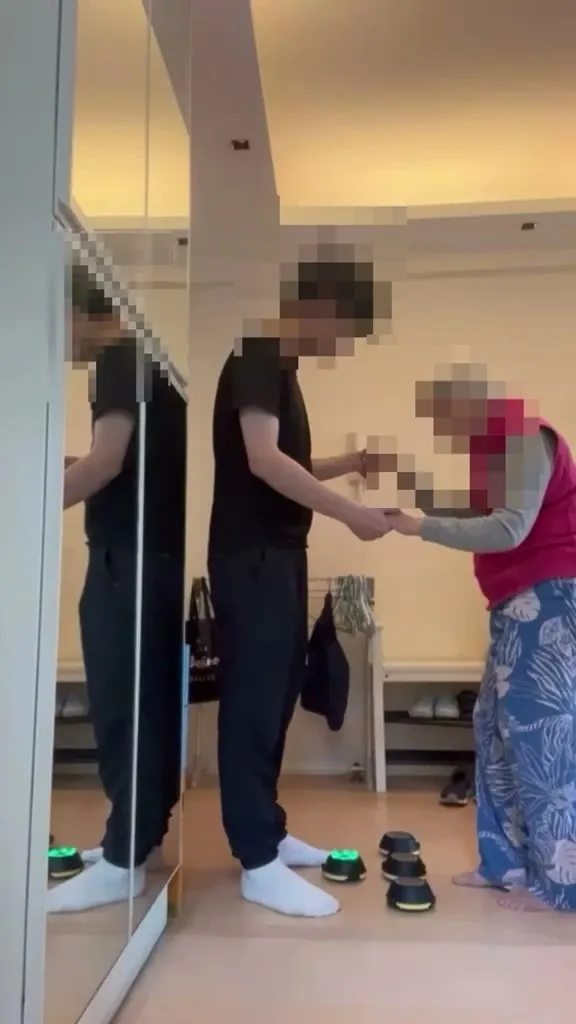
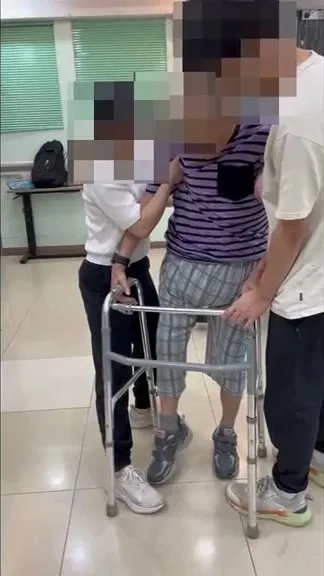
Older people do not have to go to a gym or make a special trip to a clinic. The physiotherapist brings the training tools needed and carries out targeted training in the older person’s familiar home.

Reaction-light training
Reaction-light trainingTrains reaction speed and dual tasks
Walking and balance training
Walking and balance trainingRebuilds gait and confidence with a walking frame
Core balance training
Core balance trainingStrengthens core stability on a gym ball
Stroke rehabilitation exercise
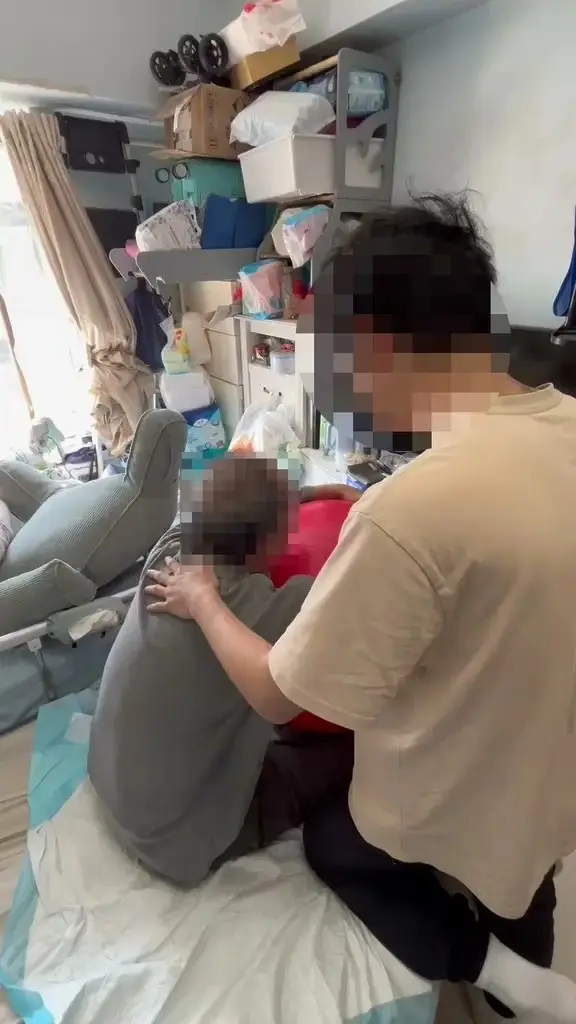
Stroke rehabilitation exerciseFloor movements to rebuild transfer ability
Joint mobility therapy
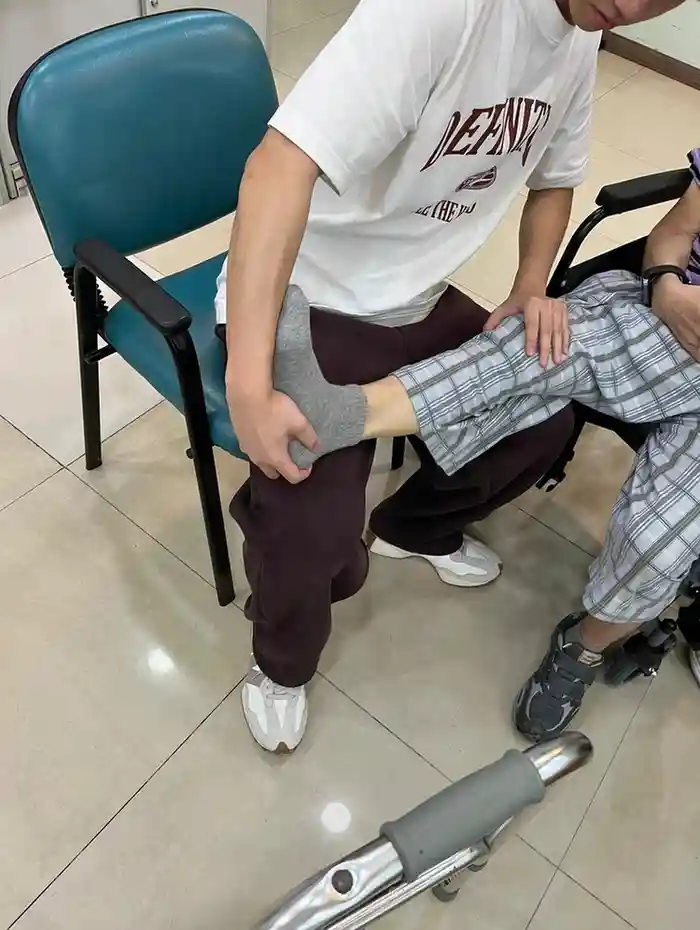
Joint mobility therapyManual mobilisation to maintain joint range
How each home session runsThe emphasis is adjusted to the symptoms, and overall fitness is improved
  1. Warm-upJoint movements, light walking and marching on the spot to prepare the body.
  2. Aerobic exerciseStepper, arm ergometer and seated marching to improve heart and lung endurance.
  3. Strength trainingResistance bands, weights and sit-to-stand training to counter muscle loss.
  4. Balance trainingSingle-leg standing, weight shifting and balance boards to reduce the risk of falls.
  5. StretchingMuscle stretches, breathing exercises and relaxation to maintain flexibility.

One-to-one training

The clinical advantages of one-to-one home treatment

Home visits are about more than convenience. When the therapist gives full attention to one older person, training can be adjusted to that person, difficult balance movements can be practised safely with close spotting, and enough encouragement can be given.

01

A treatment plan tailored to the patient

Each older person is followed one-to-one by a dedicated therapist. The therapist adjusts the training on the spot according to the real home environment, the person’s own goals and their physical state on the day, and does not copy a fixed training menu.

FOR ONE PERSON ONLY
02

Practising difficult balance movements with close spotting

Movements such as standing on one leg, tandem stance (one foot in front of the other) and dual-task training are often avoided by older people who are afraid of falling when nobody is beside them. With one-to-one close spotting, the older person can practise these advanced movements, which are the ones that prevent falls, safely.

HANDS-ON SPOTTING
03

Raising the older person’s motivation

At home, with a therapist who accompanies and guides them, older people can see clearly that they improve every week. This helps to build confidence and makes them more willing to keep practising.

KEEPS THEM GOING

Equipment for home physiotherapy

Clinic-grade medical equipment

Home physiotherapy is more than hands-on exercise, and clinic-grade treatment equipment can also be used. The physiotherapist brings suitable equipment to the patient’s home and uses it together with exercise training to speed up rehabilitation.

Therapeutic ultrasoundULTRASOUND THERAPY

Clinic-grade
Effect
Deep heat therapy that promotes blood circulation in soft tissue and speeds repair after inflammation.
Used for
Tendon or ligament strain, chronic soft-tissue pain and stiffness after surgery.

Sequential compression therapySEQUENTIAL COMPRESSION · ICE

Clinic-grade
Effect
Sectional air pressure pushes fluid from the far end towards the near end, and together with ice therapy it reduces swelling and venous congestion.
Used for
Swelling after surgery, leg oedema and poor circulation from long periods in bed.

Neuromuscular electrical stimulationNMES

Clinic-grade
Effect
An electrical current triggers muscle contraction and re-activates muscles that have stopped responding because of bed rest or stroke.
Used for
Muscle wasting, muscle weakness after stroke, and muscle groups that cannot be contracted voluntarily.

Safety first: a registered physiotherapist assesses the patient before any treatment equipment is used. The therapist checks carefully for contraindications such as a cardiac pacemaker, wounds or infection, and adjusts treatment to suit the situation. Equipment is never used without this assessment.

Case manager system

How physiotherapists are selected and managed

Professional skill is only the basic requirement. Our first standard when selecting physiotherapists is that they know how to communicate and interact with older people.

Whether an older person is willing to exercise, and whether they keep going, often depends less on how good the exercise prescription is than on how clearly the therapist explains and how well the therapist encourages them. For this reason, besides holding registration with the Physiotherapists Board and clinical experience, every one of our therapists must know how to slow down and listen patiently, so that the older person finishes each session happily. Each case is also managed by the responsible therapist as case manager, who follows treatment and day-to-day communication directly:

01

Front-line care and management together

The physiotherapist provides treatment personally, arranges the schedule, coordinates care workers and physiotherapy assistants, and promotes teamwork with occupational therapists, speech therapists and nurses.

02

Measurable goals and reports

Standardised measures are assessed regularly (such as the 1-minute sit-to-stand count, 6-minute walk distance and calf circumference). Monthly records and quarterly charted reports let the family see progress at a glance.

03

Cross-disciplinary training

A physiotherapy session can include elements of occupational therapy and speech therapy, for example colour sorting (cognition) during squat training, or picture cards to support communication. Support staff are trained to continue the training.

04

Purchase of rehabilitation supplies

Rehabilitation equipment can be purchased on the family’s behalf at transparent prices, with a 10% service fee capped at $200, which saves the family from searching in many shops.

Home rehabilitation fees

Physiotherapist and physiotherapy assistant

The physiotherapist designs the plan and supervises throughout, and the assistant continues the training on the days in between. It is one rehabilitation plan with two home-visit roles.

Leads

Physiotherapist

Registered physiotherapist

$1,000/ 1 hour$1,300/ 1.5 hours

Duration
Also available: 45 minutes $900; 2 hours or longer on enquiry
Service
Home assessment and treatment, and drawing up the rehabilitation plan
Supervision
Supervises the physiotherapy assistant throughout
Family
Same price for 2 people: two family members living together can be treated in the same session at no extra charge

Book now

Supervised throughout by the therapist

Continues training

Physiotherapy assistant

Four assistants, all therapy-degree graduates

$400/ 1 hour

Qualification
Recent therapy-degree graduates: the four current assistants graduated with first-class honours from the University of Birmingham (two of them) and Manchester Metropolitan University (BSc Physiotherapy, three years) and the University of Liverpool (BSc Occupational Therapy), and also hold a physiotherapy assistant certificate
Duties
Carries out training according to the therapist’s plan and reports progress to the therapist

Book now

Severe stroke

Two-person home visit

A physiotherapist and a physiotherapy assistant visit together

$1,300/ 1 hour

Two people in the same session

Suited to
Patients after a stroke who have been assessed as unable to stand or walk, for example because the trunk leans far forward, the core is very weak, or one leg has no strength at all.
Method
Sometimes a patient is assessed as unable to stand or walk based on help from one person. With help from two or three people, some patients are able to stand or walk, but this varies from person to person. When two people help, both support the patient’s body weight; one keeps the knee straight and the other controls the patient’s balance. In weaker cases, a third person may be needed just to stabilise the knee and pelvis.
Progress
As the patient slowly improves through neuroplasticity, the number of people needed to help may go down.
Enquiry
When you enquire, you can ask the therapist whether this mode suits the patient. At the first assessment, the therapist brings an extra assistant.
Family
A family member can take the assistant’s place, and the therapist shows them how to help during the session.

Ask about this mode

Free and brought by the therapist

Equipment and supplies for home physiotherapy

Training equipment for home physiotherapy is free, and the therapist brings professional equipment to the visit. There is nothing extra to buy or rent.

Free

Home training equipment

Provided free, according to the therapist’s assessment:

  • Yoga ball
  • Yoga mat
  • Balance cushion
  • Cold pack
  • Resistance band
  • Transcutaneous electrical nerve stimulation (TENS) deviceFreeUsed under the therapist’s guidance
  • KT tape

In line with our transparent billing commitment: items under $100 are free, and more expensive items are charged at cost.

Brought by the therapist

Professional equipment

Brought by the therapist as needed, with nothing to buy or rent:

  • Reaction lights (reaction and balance training)
  • Dry needling needles
  • Portable ultrasound
  • Neuromuscular electrical stimulation (NMES) device

Aquatic physiotherapy (an option besides home physiotherapy)

Besides home physiotherapy, aquatic physiotherapy can also be arranged. It takes place in the pool of a private club (the patient needs access to a pool) and is led one-to-one by a registered physiotherapist.

It suits patients with limited joint loading, patients in the early stage after surgery, and patients who need balance training. Training uses the resistance and buoyancy of water, and it can be alternated with home sessions.

Per session$1,800

Service process

How a home physiotherapy session runs

From assessment to follow-up, every session follows the same process.

  1. Assessment

    At the first home visit, the physiotherapist assesses the patient’s physical condition and the home environment.

  2. Treatment

    Manual therapy and exercise training, using the therapist’s own equipment where needed.

  3. Home guidance

    The patient and family are taught daily practice, and free training equipment is provided so that training continues between visits.

  4. Follow-up

    Progress is reviewed regularly, the plan is adjusted, and the physiotherapy assistant is supervised.

See fees for all services: fees page

Home physiotherapy FAQ: fees and arrangements

Home physiotherapy FAQ

NOVA HEALTH・FAQ01 – 09
How are home physiotherapy fees calculated, and is there a minimum charge?

Physiotherapy costs HK$900 for 45 minutes, HK$1,000 for 1 hour and HK$1,300 for 1.5 hours. Sessions of 2 hours or longer are available on enquiry. There is no minimum charge, so a single session can be booked as needed. There are no packages and no prepayment, the patient pays only for what is used, and an official receipt is provided after the service. Visits can be made to private homes, residential care homes or hospitals. Travel is included in the main areas of Hong Kong Island, Kowloon and the New Territories, and remote areas (such as outlying islands, Ma On Shan and Sai Kung) may carry a $100–200 travel surcharge. See the fees page for details.

Which conditions suit home physiotherapy?

Common situations include stroke, Parkinson’s disease and other neurodegenerative conditions, dementia, recovery after surgery (such as joint replacement or fracture), osteoarthritis, sarcopenia and frailty in older people, muscle pain of all kinds, chronic obstructive pulmonary disease and patients who need airway clearance or respiratory care, as well as fall prevention and fitness maintenance for older people in general. The groups below show the conditions we treat.

What is the “physiotherapist case manager system” for home physiotherapy?

For each home physiotherapy case, a physiotherapist acts as case manager. The physiotherapist provides the treatment personally, arranges the schedule, follows progress and promotes teamwork with occupational therapists, nurses and speech therapists. Front-line care and management are handled by the same person, which keeps the service consistent and information shared.

What is the difference between home physiotherapy and attending a clinic?

Home treatment lets the patient practise real movements in their own home, using their own environment and belongings, so the benefit carries over more easily to daily life. The therapist can also assess the home on the spot and change hazardous areas. Research shows that home-based rehabilitation gives results comparable to outpatient rehabilitation in many conditions (for example after joint replacement, and in pulmonary rehabilitation), and a home visit saves travelling and waiting time.

What is the difference between home physiotherapy (PT) and occupational therapy (OT)?

Home physiotherapy focuses on physical mobility (muscle strength, balance, walking, limb control, pain, and heart and lung function). Occupational therapy focuses on turning those abilities into the ability to complete daily activities (dressing, cooking, bathing, cognition and home modification). The two often complement each other in rehabilitation and can be arranged together.

Can two family members receive home physiotherapy together?

Two people pay the same price: in the same home physiotherapy session, two family members who live together can be treated together at no extra charge.

Is equipment charged separately for home physiotherapy?

The home physiotherapist brings professional equipment, so there is nothing to rent. Home training equipment is provided free according to the therapist’s assessment. Items under $100 are free, and more expensive items are charged at cost. If the patient wants to use a cold compression machine (GameReady) outside treatment sessions, a separate rental service is available (a doctor’s referral letter is required).

How is aquatic physiotherapy arranged besides home physiotherapy?

Aquatic physiotherapy takes place in the pool of a private club (the patient needs access to a pool) and costs $1,800 per session. It is led by a registered physiotherapist and can alternate with home physiotherapy. It suits patients with limited joint loading, patients in the early stage after surgery and patients who need balance training.

How is home physiotherapy paid for?

Payment is by cash, FPS or bank transfer. Payment is made after the home physiotherapy service is completed, no deposit is taken, and accounts are settled together at the end of each month.

If you would like to know whether the service suits your family, send us a message at any time.

WhatsApp us free · instant quote

Disclaimer: This article is general health information and is not professional medical advice. If you have any health concerns, please consult a qualified healthcare professional.

References

  1. Sherrington, C., Fairhall, N. J., Wallbank, G. K., et al. (2019). Exercise for preventing falls in older people living in the community. Cochrane Database of Systematic Reviews, (1), CD012424. PubMed
  2. Holland, A. E., Mahal, A., Hill, C. J., et al. (2017). Home-based rehabilitation for COPD using minimal resources: a randomised, controlled equivalence trial. Thorax, 72(1), 57–65. PubMed
  3. Bull, F. C., Al-Ansari, S. S., Biddle, S., et al. (2020). World Health Organization 2020 guidelines on physical activity and sedentary behaviour. British Journal of Sports Medicine, 54(24), 1451–1462. PubMed