
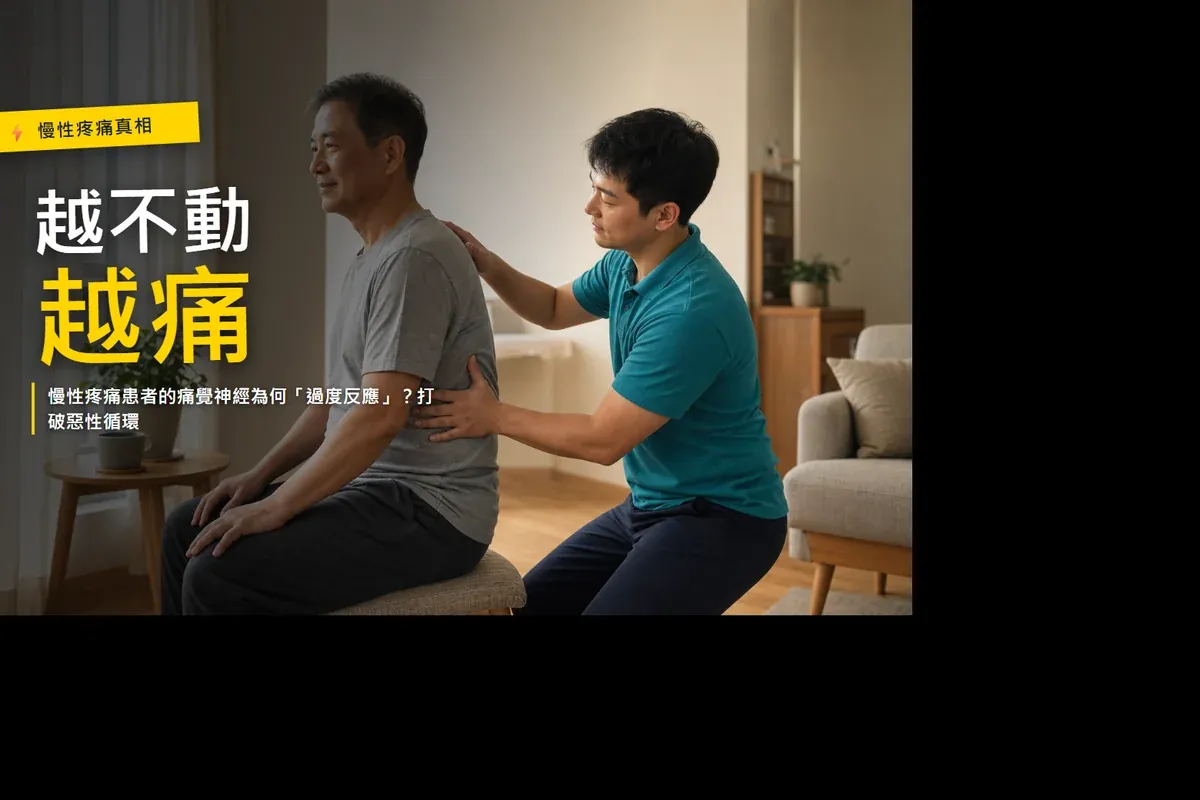
What causes chronic pain
Chronic pain differs from acute pain in its cause. Acute pain is a warning signal sent out after the body is injured. When pain lasts longer than 3 months and becomes chronic pain, it often no longer has anything to do with the original tissue damage and comes from a disorder in the function of the nervous system.
When pain stays for a long time, the nervous system goes into a state of "high alert". At this point even a very slight stimulus is misread by the body as a danger signal, and this triggers an excessive pain response. Medicine calls this "central sensitisation".
Research shows that about 30 to 50% of people with long-term pain develop "central sensitisation", which means their nervous system becomes unusually sensitive to temperature, pressure and even light touch. Many patients have had an X-ray or an MRI scan that shows the injured tissue healed long ago, yet the pain does not go away. This shows that the problem has moved to the way the nervous system regulates pain.
What is central sensitisation
Central sensitisation means a change in the way the central nervous system (the spinal cord and the brain) processes pain signals. The pain threshold falls and the area of pain widens. Specific features include:
How fear of pain and not moving become a vicious circle
Many people with chronic pain reduce their daily activities for fear of triggering pain. This avoidance often backfires and makes the pain worse:
Consequences of reducing activity out of fear of pain
- Muscle is slowly lost and strength falls
- Joints become stiff and the range of movement gets smaller and smaller
- Heart and lung function gets worse too
- The strength and endurance needed for daily activities weaken
Changes in the nervous system and in the mind
- The body's tolerance for pain becomes lower, and a slight movement is enough to hurt
- Fear of movement (kinesiophobia) develops, and the person dares to move less and less
- Anxiety and low mood become more marked
- Perception of the body's condition becomes distorted
Feeling pain does not necessarily mean that body tissue is being damaged. Long-term pain is more like a broken, oversensitive burglar alarm that rings loudly at the slightest breeze. The patient needs to recalibrate this alarm step by step through suitable activity, and should not stop moving altogether because of fear that it will ring.
How physiotherapy helps patients break this vicious circle
Modern pain science shows that managing chronic pain needs a multi-pronged physiotherapy approach:
Pain education (pain neuroscience education)
This helps the patient understand the neuroscience behind chronic pain and see that "pain does not equal damage to the body", which reduces fear and anxiety about the pain. Some studies show that pain education alone can help to lower the level of pain and improve performance in daily activities.
Graded exposure
Activity is increased step by step in safe conditions to rebuild the patient's confidence in exercise. Treatment first identifies the movements the patient fears, then designs a ladder of activities from easy to harder, so the patient can try each step in a safe setting. By building up positive experiences of success, the fear of movement can finally be removed and confidence in activity restored.
Aerobic exercise training
A suitable amount of aerobic exercise helps the body to release natural pain-relieving substances such as endorphins. It can improve sleep quality, ease anxiety and low mood, and raise overall function. It is generally advised to start with low-intensity activities such as walking or exercise in water.
Relaxation and mind-body regulation techniques
Methods such as deep breathing, progressive muscle relaxation and mindfulness meditation can lower the alert state of the nervous system, ease muscle tension and so improve how pain is felt. Mastering these techniques lets the patient regain active control over the pain.
The nervous system's ability to adapt works in both directions. Since it can become oversensitive because of long-term pain, it can also slowly return to normal function through suitable training. The key is to be patient, keep going, and combine this with the right rehabilitation approach.
Self-management in daily life
- Stay moderately active—Even when it hurts, keep up a moderate level of daily activity. The amount of exercise can be adjusted flexibly according to how the body feels that day.
- Improve sleep—Keep a regular daily routine and arrange a comfortable place to sleep.
- Adjust your way of thinking—Understand that "feeling pain does not mean the body is damaged", and put more attention on what you can do.
- Seek support—Keep in touch with family and friends, and consider joining a pain management support group to give and receive support from others in the same situation.
When putting the advice above into practice, the hardest part to judge alone is often the balance. When the pain suddenly gets stronger one day, is it only the sensitised system overreacting, or is it a real warning that the body needs to slow down? The same pain calls for completely opposite responses. It is very hard to tell from how it feels at that moment. It usually takes a comparison, side by side, of several weeks of activity levels and changes in pain before the picture becomes clear. This is also one of the things that a therapist keeps recording and checking during home physiotherapy.
Troubled by chronic pain? Our physiotherapists can visit you at home to assess your pain and draw up a personalised management plan.
Book a home physiotherapy assessment