
The right home rehabilitation equipment can extend professional training into the patient's home. Equipment is by no means better the more of it there is. The core principle is to choose suitable tools according to the patient's level of function, and to learn the right dose of use under the therapist's guidance. The sections below introduce six common pieces of equipment in two groups, “rehabilitation training” and “daily care and mobility”, with recommendations on use for the equipment that has evidence behind it (standing frames, NMES and pedal exercisers).
Rehabilitation training equipment
This equipment is made for rehabilitation training at home and helps patients stay at home while continuing exercise at a professional standard.
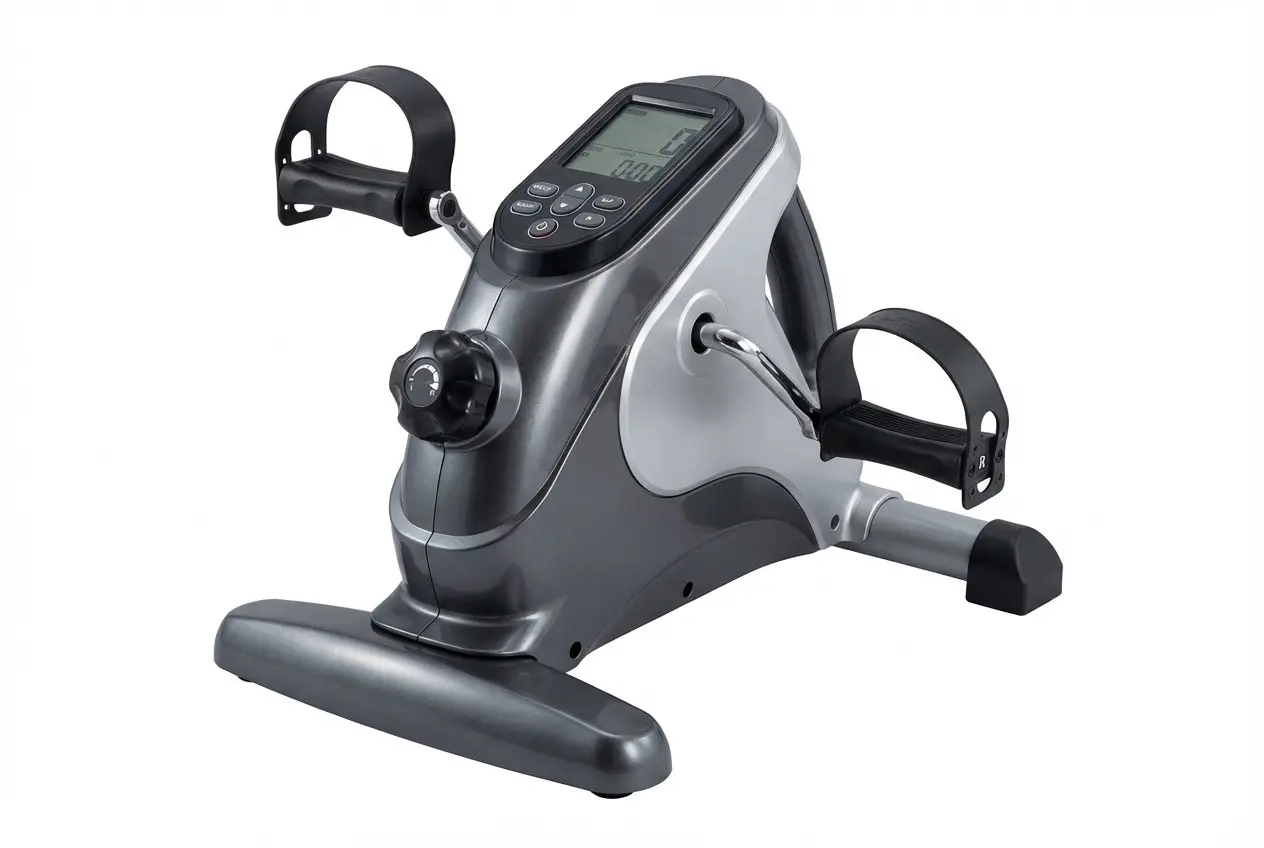
Arm and leg pedal exerciser (Pedal Exerciser)
Aerobic exercise and limb coordination training without leaving home
Main functions
- Improves heart and lung function
- Trains muscle strength and endurance
- Promotes blood circulation
- Keeps the range of joint movement
Suitable users
- Stroke patients in rehabilitation
- People in bed for long periods who need rehabilitation exercise
- People with weak legs or limited mobility
- People who need aerobic exercise at home
Research evidence: aerobic exercise training (including pedalling) has Cochrane-level research evidence, and can improve walking speed, six-minute walking distance and balance (Saunders et al., 2016). 15–30 minutes a day is suggested, and at first the resistance should be set low. Some models also have a motor assist, which suits patients with complete weakness for passive training.
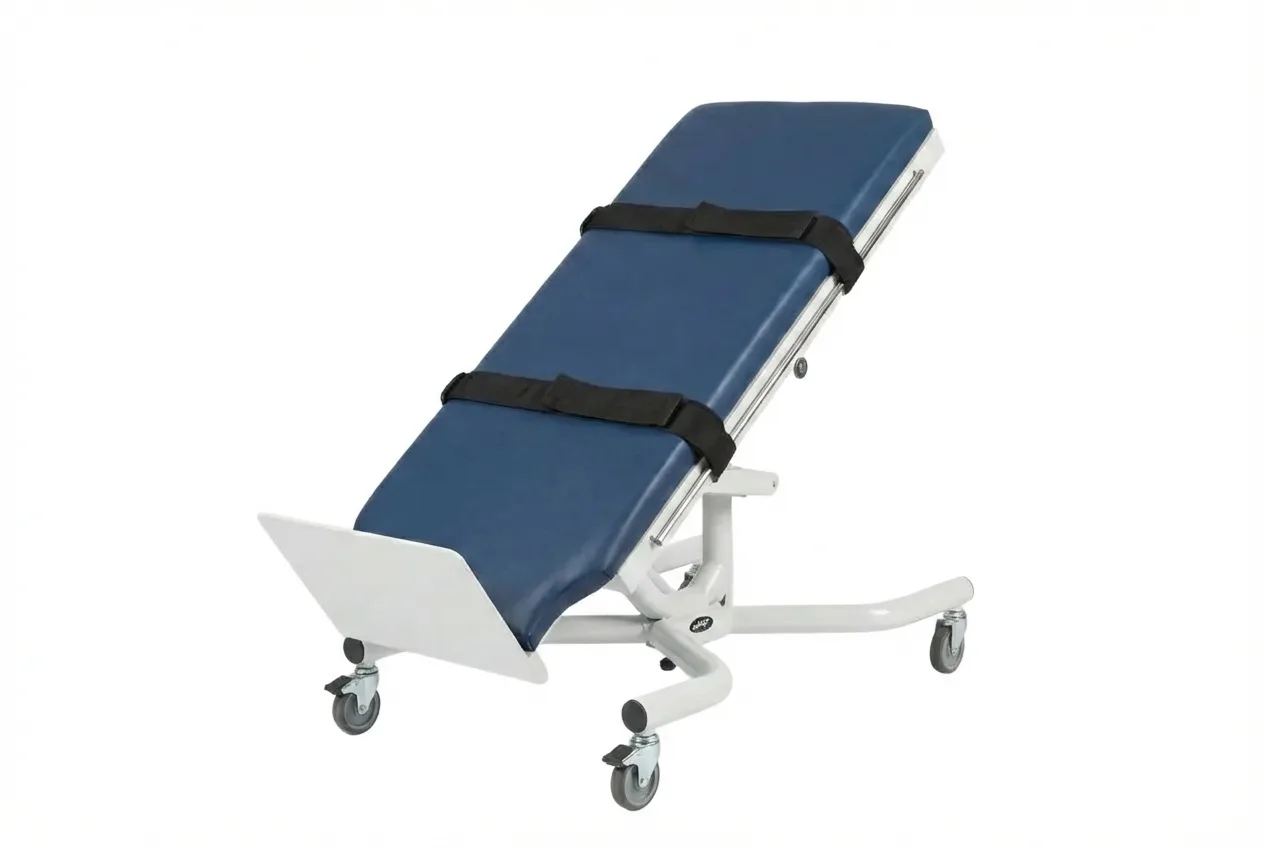
Standing frame (Standing Frame)
The gold standard of early weight-bearing training
Physiological benefits
- Protects bone: slows bone loss
- Stretches soft tissue
- Improves circulation: prevents dizziness on standing up (orthostatic hypotension)
- Helps bowel movement and emptying of the bladder
Types of equipment
- Forward-tilting: suits use in the early stage of training
- Backward-tilting: gives more support for the body
- Electric lift: makes transfers from bed and changes of position easier for the patient
- Multi-function standing bed
Suggested time of use (Paleg & Livingstone, 2015):to improve joint range of movement and increase the amount of daily activity, about 30 minutes per session and 5 times a week is suggested. To address bone density and cognitive function, 60 minutes of standing a day is suggested (although the effect on bone density has not been settled). Passive standing does not mean the longer the better. It must be adjusted according to changes in the patient's blood pressure and used under a therapist's guidance.
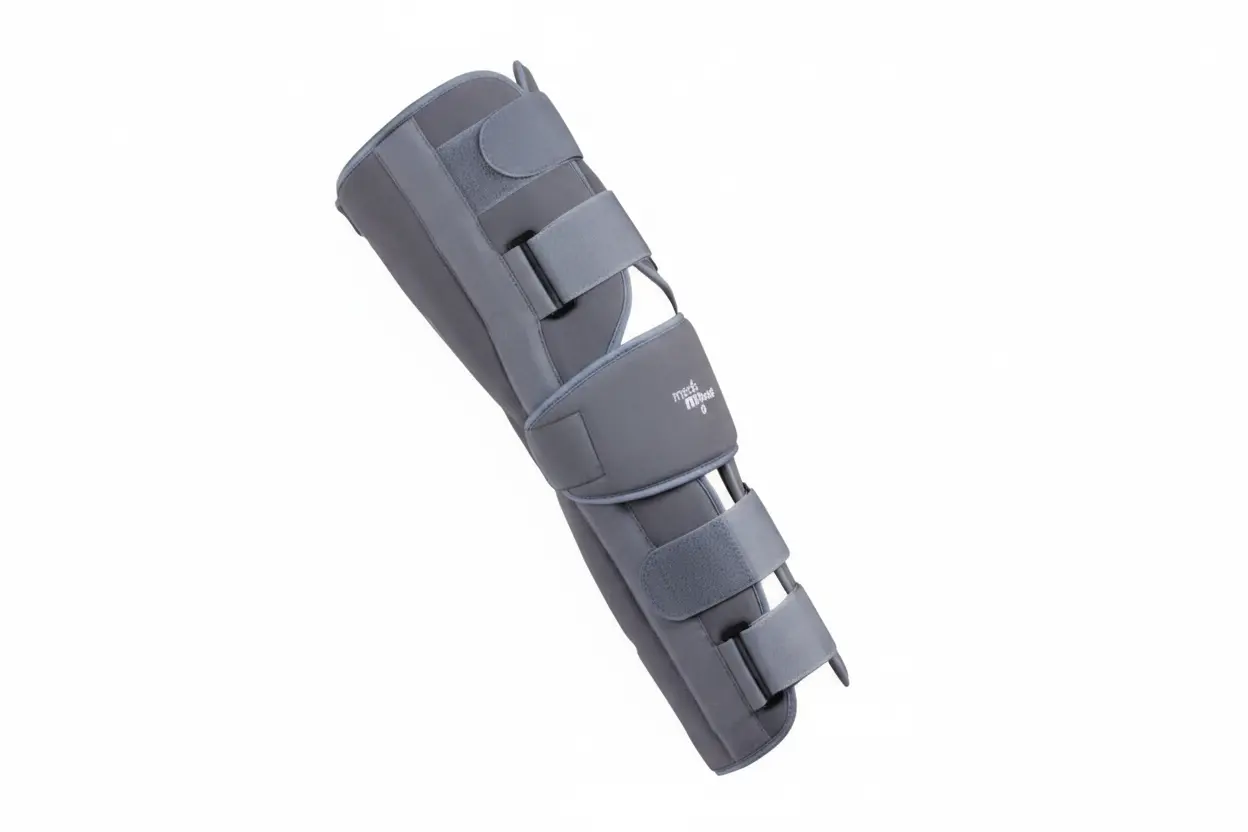
Knee gaiter (Gaiter)
Stabilises the knee joint and supports standing and walking training
When it is suitable
- Not enough strength to straighten the knee
- The knee gives way or bends by itself when standing up
- The knee joint needs extra support when practising standing in the early stage
- Used together with a standing frame
Points to note
- It is not advisable to wear it for long periods, to avoid becoming dependent on it
- Check the skin at pressure points regularly for redness or breaks
- It must be used under a therapist's guidance
- As leg strength slowly improves, use should be reduced step by step
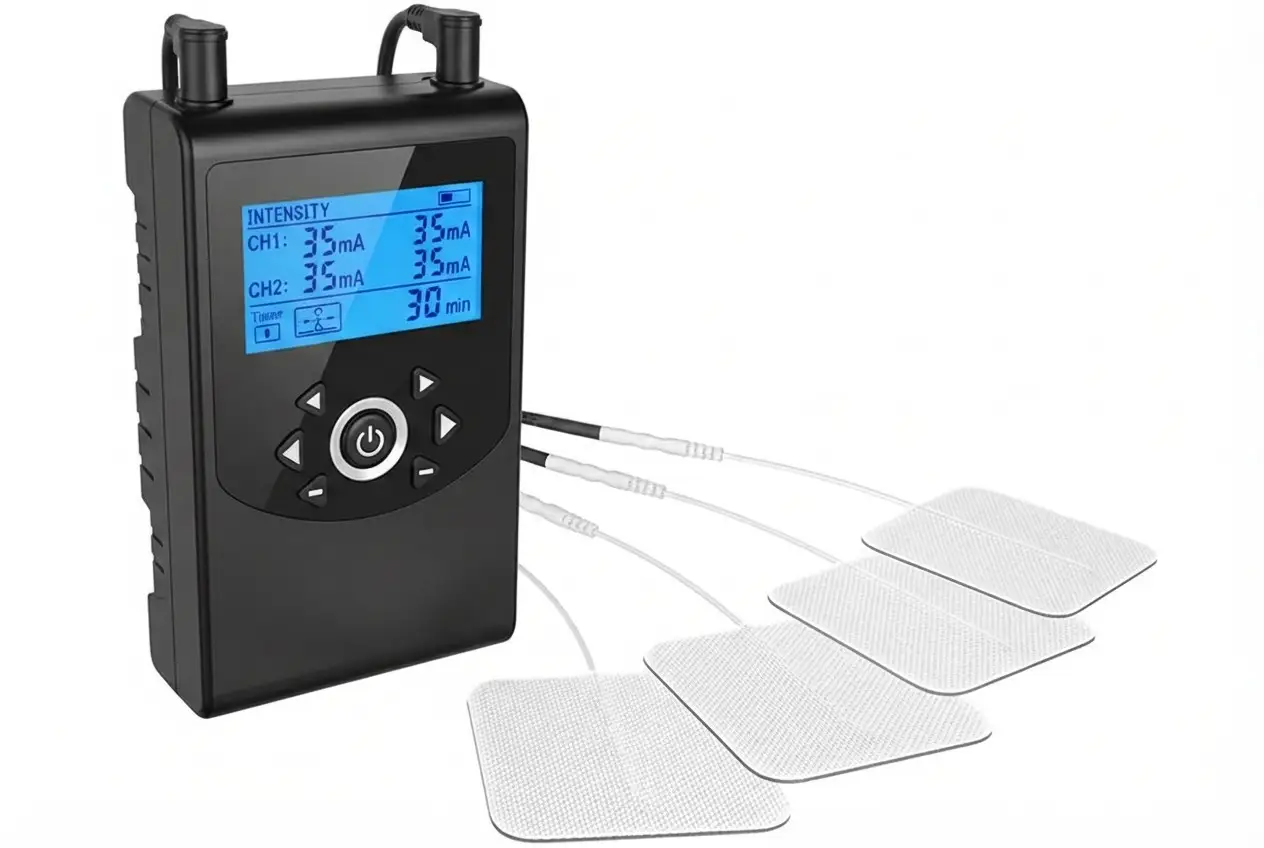
Neuromuscular electrical stimulator (NMES)
Wakes up dormant muscles with a small electric current
Common sites of use
- Quadriceps (front of the thigh): helps to keep the strength to straighten the knee
- Tibialis anterior (front of the lower leg): helps to lift the toes and improves foot drop
- Gluteus maximus: strengthens the hip extending backwards
- Shoulder muscles: prevents subluxation of the shoulder joint
Advanced functions
- FES (functional electrical stimulation): current is delivered in step with the patient's intention to move, to help complete the movement
- EMG-triggered mode: first detects the faint contraction signal of the muscle and then delivers current to assist
Research evidence: NMES is often used to train the arms and legs of people with hemiplegia, and can maintain muscle mass and reduce the muscle wasting caused by moving less (Knutson et al., 2015). For patients with foot drop, adding electrical stimulation to usual rehabilitation training can improve the range of lifting the ankle up and lower limb function (Wang et al., 2025). Each session lasts about 15–20 minutes.
Points of caution:it must be used under a therapist's guidance. It is strictly forbidden for patients with a cardiac pacemaker, and electrodes must not be placed on skin that has a wound or is infected. The whole treatment should be painless, the patient feels only a slight tingling, and the strength of the current must be set by the therapist.
Daily care and mobility equipment
This equipment is meant to help with daily personal care and getting about outside. It can improve the patient's quality of life and also lighten the physical load on carers.
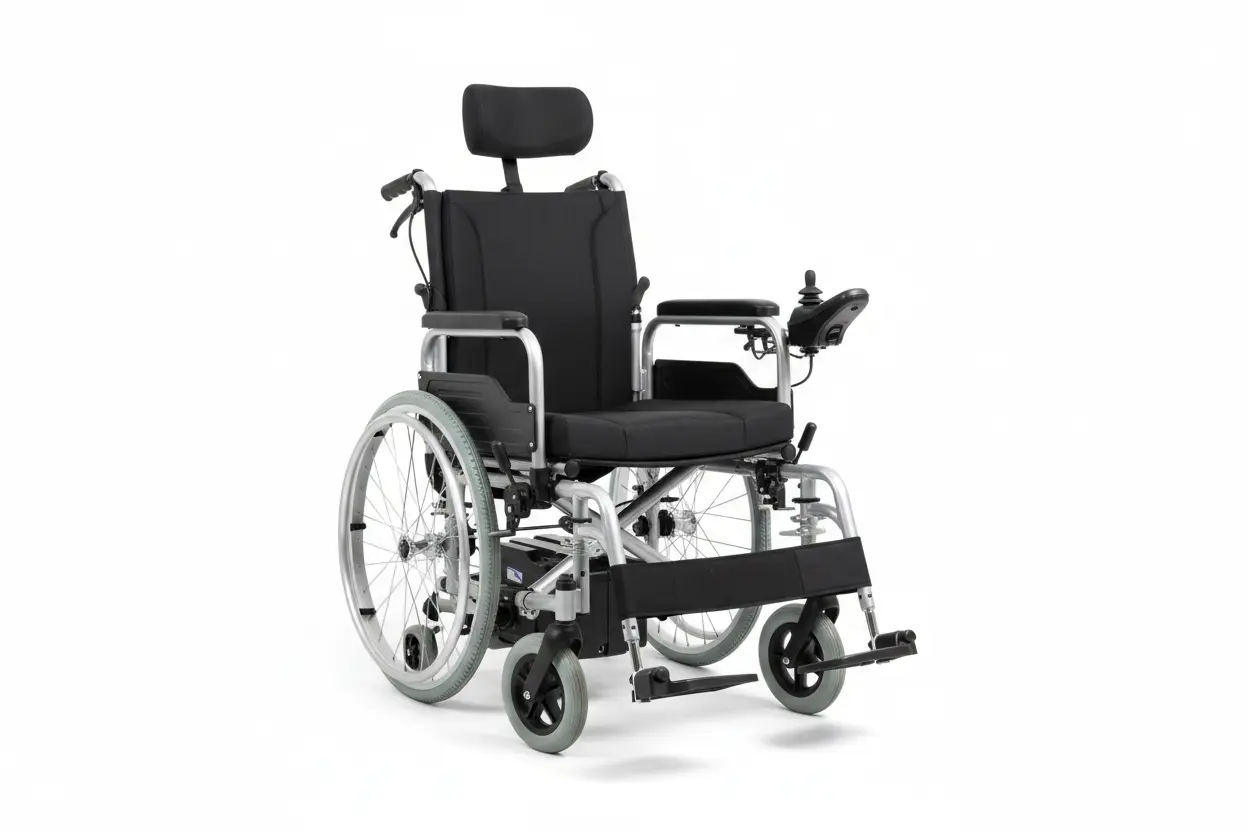
Electric wheelchair (Electric Wheelchair)
Raises independence in daily life and range of movement
Common types
- Standard: suits use indoors and outdoors
- Lightweight folding: easy to fold and store, convenient to take out
- Standing type: can raise the seat to bring the patient into a standing position
- Reclining type: the backrest can be tilted back at an adjustable angle
Ways of control
- Joystick control: the most common type, with direction controlled by one hand
- Head or chin control: suits people with weak arms and legs
- Sip-and-puff control: suits patients with high spinal cord injury
- Eye control system: a new technology that is controlled by movement of the eyes
Buying advice:before buying, it is advisable to ask an occupational therapist or physiotherapist to assess the patient's ability to control it, the right seat size, and whether the home has room to turn. Hong Kong residents can also apply for subsidies for buying equipment through the Social Welfare Department or related organisations.
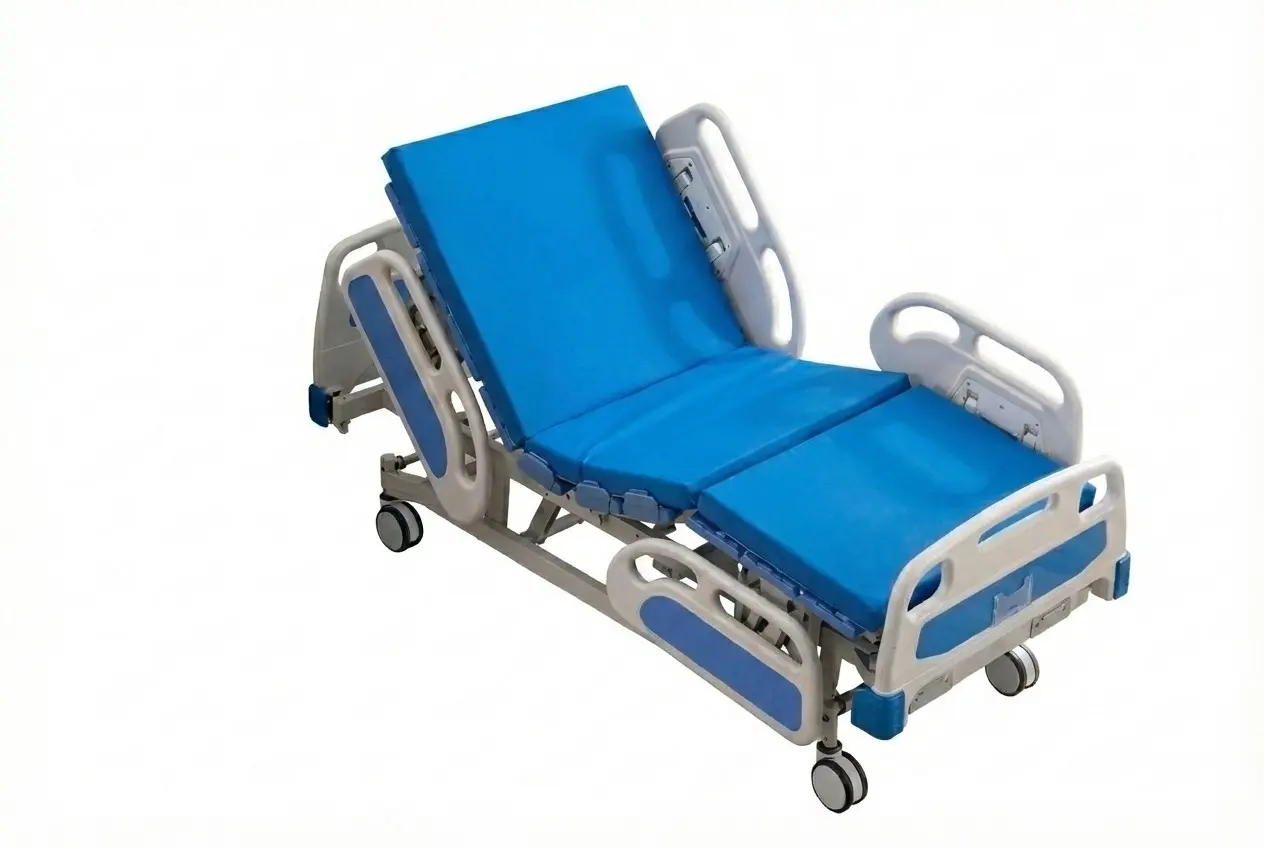
Electric nursing bed (Electric Nursing Bed)
Adjustable at several angles, improving the quality of care overall
Adjustable functions
- Raising the head end: makes it easy for the patient to sit up for meals, and also reduces acid reflux
- Raising the foot end: lifts the legs to help blood return
- Raising and lowering the whole bed: can be set to a suitable height so carers can change nappies or sponge the patient without bending over for long
- Side-turning function: some models tilt electrically to the left and right to help turn the patient
Accessory options
- Bed rails: stop the patient falling out of bed, and the patient can hold them to turn over
- Over-bed table: set over the bed so the patient can eat or keep everyday items within reach
- Overhead bar: can hold an intravenous drip, or be pulled on by the patient to sit up
- Pressure-relieving mattress: spreads body pressure evenly to prevent pressure sores
Buying points: before buying a bed, check that its weight limit is high enough, measure beforehand whether the corridor and door at home are wide enough to bring it in, choose a model that can be cranked flat by hand during a power cut, and ask clearly about after-sales maintenance and repair arrangements.